
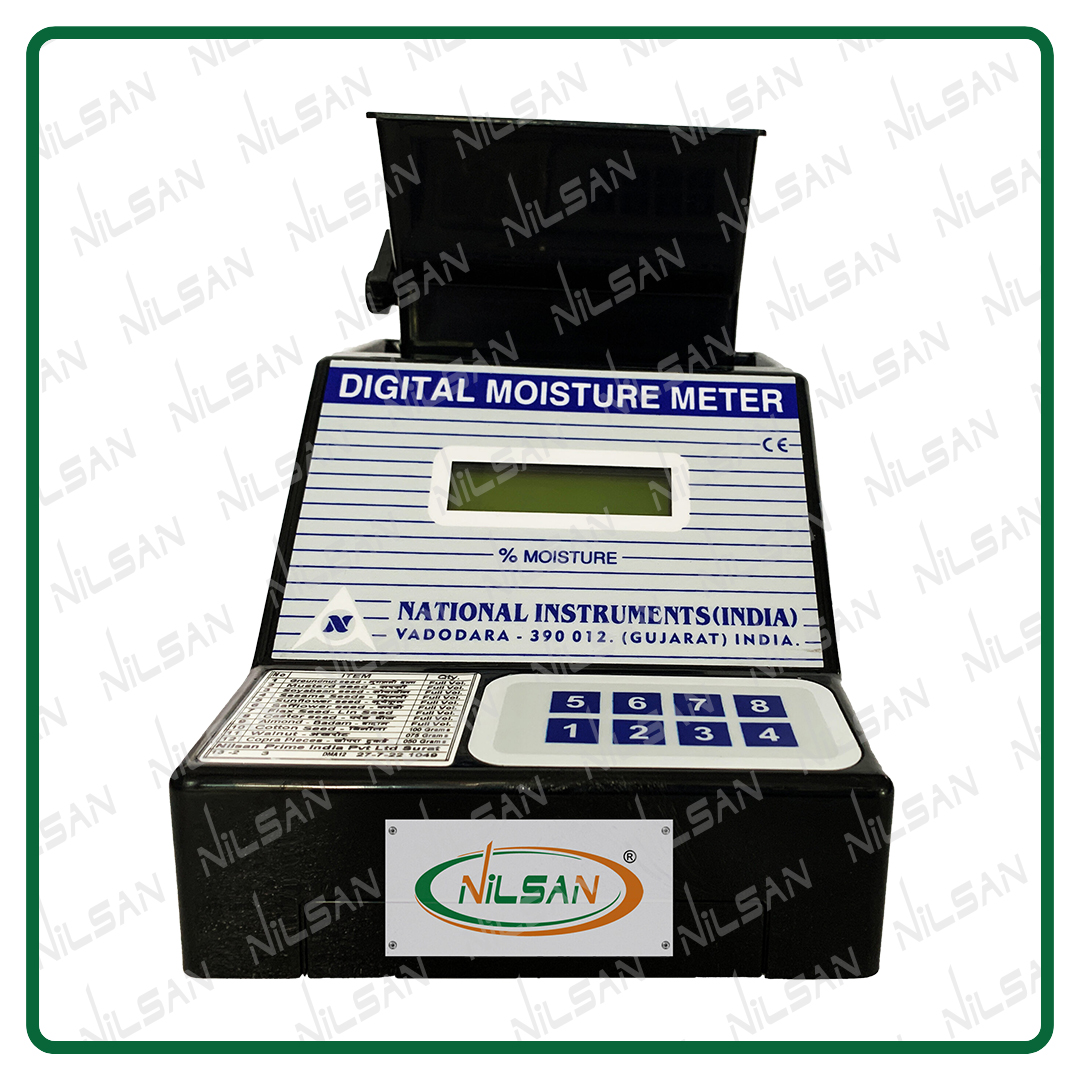


Digital Moisture Meter for Seeds, Grains and Oilseeds
Moisture content is one of the most important variables in seed quality, storage life, and oil extraction output. Too much moisture in oilseeds before pressing reduces oil yield and causes problems inside the pressing chamber. Too little moisture in stored grain affects germination rates and market value.
A digital moisture meter takes the guesswork out of both situations. The Nilsan NS-DMM digital moisture meter gives you an accurate moisture reading in seconds – without sending samples to a lab, without waiting, and without relying on visual assessment that varies from person to person.
Whether you are a farmer checking seeds before storage, an oil mill operator preparing oilseeds before pressing, a grain trader assessing stock quality, or a processor managing raw material before production, a digital moisture meter is the tool that gives you reliable data to make the right decision at the right time.
A digital moisture meter takes the guesswork out of both situations. The Nilsan NS-DMM digital moisture meter gives you an accurate moisture reading in seconds – without sending samples to a lab, without waiting, and without relying on visual assessment that varies from person to person.
Whether you are a farmer checking seeds before storage, an oil mill operator preparing oilseeds before pressing, a grain trader assessing stock quality, or a processor managing raw material before production, a digital moisture meter is the tool that gives you reliable data to make the right decision at the right time.
What Is a Digital Moisture Meter?
A digital moisture meter is an electronic instrument that measures the moisture content present in a seed, grain, or similar material sample and displays the reading on a digital screen. The reading tells you what percentage of the sample’s weight is water.
The working principle measures the electrical resistance or dielectric constant of the material being tested. Materials with higher moisture content conduct electricity differently from dry materials – the meter detects this difference and converts it into a percentage moisture reading displayed on the LCD screen.
What makes a digital moisture meter more useful than older methods is the speed and simplicity of the reading. Where traditional moisture testing required a drying oven, a weighing scale, time, and calculation, a digital meter gives you the same information in seconds – accurate enough to make storage, processing, and trading decisions with confidence.
The working principle measures the electrical resistance or dielectric constant of the material being tested. Materials with higher moisture content conduct electricity differently from dry materials – the meter detects this difference and converts it into a percentage moisture reading displayed on the LCD screen.
What makes a digital moisture meter more useful than older methods is the speed and simplicity of the reading. Where traditional moisture testing required a drying oven, a weighing scale, time, and calculation, a digital meter gives you the same information in seconds – accurate enough to make storage, processing, and trading decisions with confidence.
Which Seeds and Materials Can Be Tested?
The Nilsan NS-DMM is a reliable oilseed moisture meter calibrated for a wide range of oilseeds, food grains, and pulses – the materials most commonly used in agriculture, oil processing, grain trading, and food manufacturing across India.
Oilseeds: Groundnut, mustard, sesame, soybean, sunflower, safflower, flaxseed, cottonseed, castor, almond, walnut, coconut
Food Grains and Cereals: Wheat, rice, paddy, maize, jowar, bajra, barley, ragi
Pulses: Toor, moong, urad, chana, masoor, peas, and other common pulse varieties
Spices: Coriander, black pepper, fennel, cardamom, cloves, and other suitable dry spice varieties
The range of supported materials makes the NS-DMM a practical single instrument for operations that work across multiple seed and grain types – rather than needing separate instruments for each material category.
Oilseeds: Groundnut, mustard, sesame, soybean, sunflower, safflower, flaxseed, cottonseed, castor, almond, walnut, coconut
Food Grains and Cereals: Wheat, rice, paddy, maize, jowar, bajra, barley, ragi
Pulses: Toor, moong, urad, chana, masoor, peas, and other common pulse varieties
Spices: Coriander, black pepper, fennel, cardamom, cloves, and other suitable dry spice varieties
The range of supported materials makes the NS-DMM a practical single instrument for operations that work across multiple seed and grain types – rather than needing separate instruments for each material category.
How Does a Digital Moisture Meter Work?
Using the NS-DMM digital moisture meter is straightforward from the first reading.
Step 1 – Select the Material: Choose the correct material setting on the meter for the seed or grain you are testing. The meter uses material-specific calibration to give an accurate reading for each seed type.
Step 2 – Prepare the Sample: Take a representative sample from the batch. The sample should reflect the actual condition of the material – not the driest or the wettest handful from the batch.
Step 3 – Load the Sample: Place the sample into the meter’s sample holder or cavity as per the instrument’s instructions for the material being tested.
Step 4 – Read the Result: The digital moisture reading appears on the LCD within seconds. The reading shows the moisture percentage in the sample.
Step 5 – Make the Decision: Use the reading to decide whether the material is ready for storage, pressing, processing, or trading – or whether it needs further drying before the next step.
Step 1 – Select the Material: Choose the correct material setting on the meter for the seed or grain you are testing. The meter uses material-specific calibration to give an accurate reading for each seed type.
Step 2 – Prepare the Sample: Take a representative sample from the batch. The sample should reflect the actual condition of the material – not the driest or the wettest handful from the batch.
Step 3 – Load the Sample: Place the sample into the meter’s sample holder or cavity as per the instrument’s instructions for the material being tested.
Step 4 – Read the Result: The digital moisture reading appears on the LCD within seconds. The reading shows the moisture percentage in the sample.
Step 5 – Make the Decision: Use the reading to decide whether the material is ready for storage, pressing, processing, or trading – or whether it needs further drying before the next step.
Why Moisture Content Matters – For Every Application
For Oil Mill Operators: Oilseeds fed into an Oil Press Machine at the wrong moisture level directly affect oil yield and extraction quality. Seeds that are too wet produce lower oil output, cause material to stick inside the pressing chamber, and reduce the quality of the extracted oil. Seeds that are too dry also press inefficiently. Checking moisture with a digital moisture meter before every pressing session helps operators get the most oil from every batch of seeds. For businesses running an Oil Expeller Press at commercial volumes, that yield difference across hundreds of batches adds up to a significant amount over a year of production.
For Farmers and Grain Storage: Seeds stored at moisture levels above the safe range develop mould, fungal growth, and insect infestation faster than properly dried seeds. A digital moisture meter lets farmers check moisture before storage and take corrective action – additional drying – before a batch deteriorates in the godown.
For Grain Traders and Processors: Moisture content is one of the primary quality parameters in grain trading. Buying at moisture levels above the agreed specification, or selling below, directly affects the financial terms of the transaction. A grain moisture meter gives both buyer and seller a fast, objective reading at the point of transaction.
For Seed Quality Management: Properly dried seeds with moisture content within the safe range germinate more evenly, have longer storage life, and are less susceptible to pest and disease damage during storage.
For Farmers and Grain Storage: Seeds stored at moisture levels above the safe range develop mould, fungal growth, and insect infestation faster than properly dried seeds. A digital moisture meter lets farmers check moisture before storage and take corrective action – additional drying – before a batch deteriorates in the godown.
For Grain Traders and Processors: Moisture content is one of the primary quality parameters in grain trading. Buying at moisture levels above the agreed specification, or selling below, directly affects the financial terms of the transaction. A grain moisture meter gives both buyer and seller a fast, objective reading at the point of transaction.
For Seed Quality Management: Properly dried seeds with moisture content within the safe range germinate more evenly, have longer storage life, and are less susceptible to pest and disease damage during storage.
Key Features of the Nilsan NS-DMM Digital Moisture Meter
Accurate Readings: The NS-DMM delivers moisture readings within a reliable accuracy range, giving you consistent, repeatable results across repeated tests of the same material.
Fast Results: Results appear on the digital display within seconds of loading the sample. No waiting, no calculations, no laboratory equipment required.
Wide Material Range: As a versatile seed moisture meter and grain moisture meter in one instrument, the NS-DMM is calibrated for oilseeds, food grains, pulses, and spices – covering the range of materials used in agriculture, oil processing, grain trading, and food manufacturing without needing a separate instrument for each category.
Digital LCD Display: The clear digital display shows the moisture reading and the room temperature simultaneously – no ambiguity in reading the result, even in field conditions.
Portable and Lightweight: The compact body is built for field use – easy to carry to a godown, a farm, or a trading yard without any setup requirement beyond a battery.
No Moving Parts: The electronic measuring principle involves no mechanical moving parts, which means no wear and tear on internal components and no calibration drift from mechanical degradation over time.
Room Temperature Display: The NS-DMM shows room temperature alongside the moisture reading – useful because temperature affects moisture content and storage decisions in practice.
Easy Operation: Straightforward button controls and clear labelling make the NS-DMM usable without training for anyone familiar with basic electronic instruments.
Fast Results: Results appear on the digital display within seconds of loading the sample. No waiting, no calculations, no laboratory equipment required.
Wide Material Range: As a versatile seed moisture meter and grain moisture meter in one instrument, the NS-DMM is calibrated for oilseeds, food grains, pulses, and spices – covering the range of materials used in agriculture, oil processing, grain trading, and food manufacturing without needing a separate instrument for each category.
Digital LCD Display: The clear digital display shows the moisture reading and the room temperature simultaneously – no ambiguity in reading the result, even in field conditions.
Portable and Lightweight: The compact body is built for field use – easy to carry to a godown, a farm, or a trading yard without any setup requirement beyond a battery.
No Moving Parts: The electronic measuring principle involves no mechanical moving parts, which means no wear and tear on internal components and no calibration drift from mechanical degradation over time.
Room Temperature Display: The NS-DMM shows room temperature alongside the moisture reading – useful because temperature affects moisture content and storage decisions in practice.
Easy Operation: Straightforward button controls and clear labelling make the NS-DMM usable without training for anyone familiar with basic electronic instruments.
Who Uses a Digital Moisture Meter?
Oil Mill Operators and Oil Press Machine Users – Every oil mill operator who has run a batch of seeds at the wrong moisture level knows what it costs. Low oil yield. Sticky residue inside the pressing chamber. A cleaning session that takes longer than the batch did. A quick moisture check before pressing prevents all three.
Farmers – Most seed spoilage in storage is moisture-related and entirely avoidable. The seeds went in too wet, the godown did its thing, and weeks later the batch is compromised. A digital moisture meter reading before storage does not take long – and finding out the seeds need more drying time is considerably better than finding out they went bad.
Grain Traders and Commodity Brokers: Measuring moisture at the point of buying and selling grain to confirm quality against specification and settle moisture-related pricing adjustments.
Food Processors and Manufacturers: Raw material quality control – confirming that incoming grain, seed, or spice raw material is within acceptable moisture limits before it enters the production line.
Agro Processing Units: Any operation that handles raw agricultural material benefits from a fast, reliable moisture check at intake and before processing.
Agricultural Research and Extension: A reliable moisture meter for agriculture is essential for seed quality assessment, storage research, and on-farm advisory work where moisture data is part of the quality evaluation.
Farmers – Most seed spoilage in storage is moisture-related and entirely avoidable. The seeds went in too wet, the godown did its thing, and weeks later the batch is compromised. A digital moisture meter reading before storage does not take long – and finding out the seeds need more drying time is considerably better than finding out they went bad.
Grain Traders and Commodity Brokers: Measuring moisture at the point of buying and selling grain to confirm quality against specification and settle moisture-related pricing adjustments.
Food Processors and Manufacturers: Raw material quality control – confirming that incoming grain, seed, or spice raw material is within acceptable moisture limits before it enters the production line.
Agro Processing Units: Any operation that handles raw agricultural material benefits from a fast, reliable moisture check at intake and before processing.
Agricultural Research and Extension: A reliable moisture meter for agriculture is essential for seed quality assessment, storage research, and on-farm advisory work where moisture data is part of the quality evaluation.
NS-DMM Digital Moisture Meter – Specifications
| Parameter | Specification |
|---|---|
| Model | NS-DMM |
| Display | Digital LCD |
| Measurement Principle | Dielectric / Electrical Resistance |
| Material Coverage | Oilseeds, Grains, Pulses, Spices |
| Additional Display | Room Temperature |
| Body | Compact, Portable |
| Operation | Battery Powered |
| Moving Parts | None – Maintenance Free |
Contact Nilsan India for complete technical specifications.
Frequently Asked Questions
A digital moisture meter is an electronic instrument that measures the moisture content in seeds, grains, or similar materials and displays the result as a percentage on a digital screen. It is used to assess material quality before storage, trading, or processing.
The NS-DMM is calibrated for oilseeds including groundnut, mustard, sesame, soybean, sunflower, safflower, flaxseed, cottonseed, and castor, as well as food grains, pulses, and dry spice varieties. The full list of supported materials is available from Nilsan India.
The NS-DMM provides reliable moisture readings suitable for making storage, processing, and trading decisions. Contact Nilsan India for specific accuracy specifications for the NS-DMM model.
Oilseeds pressed at incorrect moisture levels give lower oil yield and cause operational problems inside the pressing chamber. Checking moisture before pressing helps operators optimise extraction output from every batch.
Yes. The instrument is compact, lightweight, battery-powered, and has no moving parts – designed for use in field conditions, godowns, trading yards, and farm locations without any setup infrastructure.
Yes. The NS-DMM displays room temperature alongside the moisture reading – useful because temperature is a relevant factor in moisture assessment and storage decisions.
Select the correct material setting, load a representative sample into the instrument’s sample holder, and read the moisture percentage displayed on the LCD screen within seconds. No laboratory equipment or calculations required.
Yes. The fast, objective moisture reading the NS-DMM provides is directly useful for quality assessment at the point of grain buying and selling, where moisture content affects price and specification compliance.
There are no reviews yet.